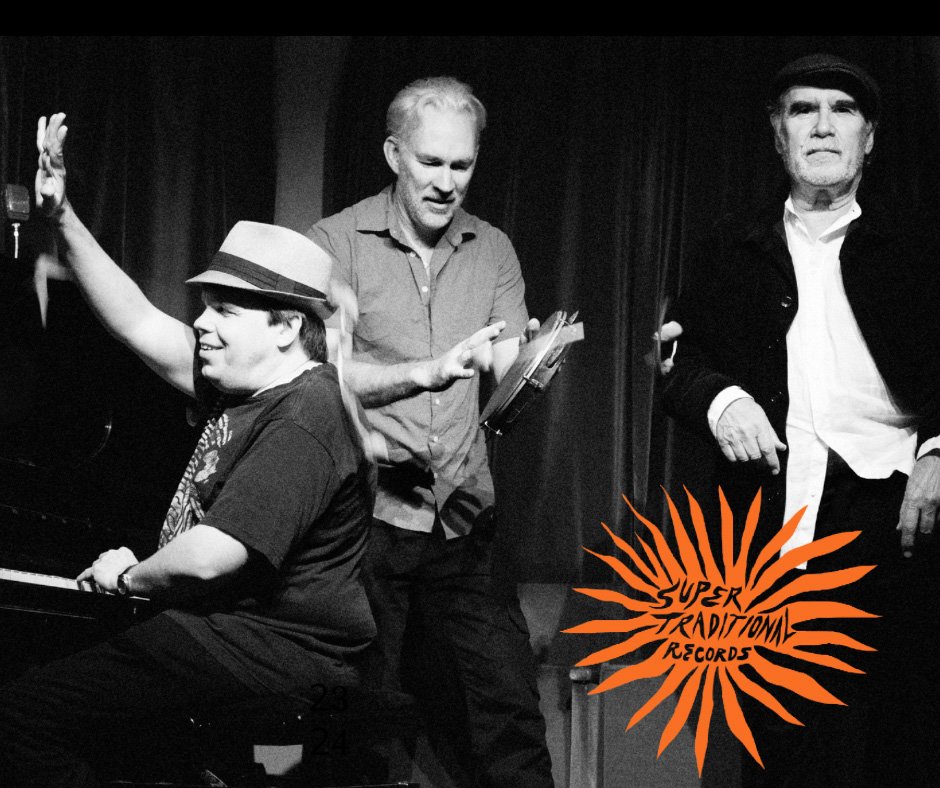

Ale Möller (born in 1955) is a constant explorer, always on his way somewhere. Firmly anchored in traditional music, Möller has taken the forefront and expanded the borders of Scandinavian folk music in groups and projects such as Filarfolket, Nordan and Frifot. But the journey began in jazz; for quite some time, his great favorite was trumpeter Clifford Brown and the trumpet his primary instrument. A meeting with Greek musician Christos Mitrencis in his hometown Malmö sent Möller headlong into Greek music and a passionate relationship to a new instrument, the bouzouki. In the years that followed, Möller toured with a Greek orchestra, both in Sweden and in Greece. Recurrent collaboration with composer Mikis Theodorakis evolved into poignant experiences, both in the music itself but also in the intense relationship between the culture and the identity he found in Greece. This eventually led to a turning point.

ale möllerA growing insight that the strength in Greek music was not merely a question of melodies and musical notes but primarily a connection to its own history prompted him to return home again to explore his own roots. This was in the beginning of the 80s and Möller moved home to Sweden, to Dalarna where the master fiddle players were found. The next ten years were dedicated to traditional music, to learning the songs and getting to know the people behind them and, not least, to fight against the preconceived notion that they can only be played on the fiddle. Möller wanted to use his bouzouki and instead attempted to “translate” over to the instrument. But in order to succeed, the instrument needed to be modified, not only in a purely technical sense so as to be able to play the scales but also to find the right feeling and sound. In cooperation with various instrument makers, Möller has developed his own version of the mandola, an octave mandolin, with an extra base drone, movable “pin-point capos” and quarter-tone frets for microtonality.

Along with personalities such as Mats Edén in Groupa, Möller was a central figure in the search for new directions and new sounds in Swedish folk music during the 1980s. With regard to records, the decade saw the release of five albums with Filarfolket and several albums under his own name. He also collaborated on and produced numerous records, including vocalist Lena Willemark’s first solo album (recently  re-released in a remastered version, AMCD 722).

ale möllerImprovisation is an important component in Möller’s musicianship. He has often played with jazz musicians and improvisational folk musicians from different cultures. An important place for these meetings to take place was the world music group Enteli (1985-1995), made up of Möller, Willemark, jazz saxophonist Jonas Knutsson, keyboard player Johan Söderqvist and percussionist Bengt Berger. The same desire for introducing freedom and improvisation in a folk music context can also be said to characterize Möller and Willemark’s two trend-setting and very successful albums on the international ECM label from the middle of the 1990s: Nordan and Agram. Among other things, Nordan won a number of awards including a Grammy here at home and the Deutsche Musikkritikerpreis in Germany.

There are clear, strong ties between the folk music arenas in Sweden and those in Norway, and Möller has been deeply involved in a number of key projects in Norway as well. The main examples of this are the more tradition-bound collaborations with Harding fiddler Gunnar Stubseid and singer Kirsten Bråten Berg. Bråten Berg’s “Min Kvedarlund”, which was painstakingly produced by Möller (who also played the majority of instruments), is a classic. The album was awarded a Norwegian Grammy.

In the trio Frifot, Möller and Willemark are joined by one of Sweden’s most appreciated and respected master fiddle players, Per Gudmundson. The group holds a special place among the greats of the Swedish folk music scene. Since its formation in 1987, Frifot has been at the forefront of those active on the more tradition-oriented part of this scene. Extensive touring has also brought Frifot far beyond the borders of Sweden – most recently they paid their first visit to Japan in December 2003, and a new visit has been planned for the autumn of 2004. Frifot’s latest album, “Sluring”, was recently awarded the Manifest Prize (Manifestpriset) and has also been nominated for a Grammy.

Ale Möller’s collaboration with Shetlandic fiddle legend Aly Bain has also received much deserved recognition. In 2001, they jointly released the CD, “Fully Rigged”.

During the past couple of years, Ale Möller has worked with the meeting between musicians from different cultures and traditions in a series of successful projects. Together with Jonas Knutsson, he formed the Stockholm Folk Music Big Band in 1998, a folk music big band made up of 14 musicians with roots in different parts of the world. In 1999, the album “Latitudes Crossing” was released. Concerts with SFBB were continued in the World Music Laboratories in 2000, a “research station” where musicians from different traditions worked methodically to find functional common denominators in music. In 2000, 2001 and 2002, Möller was the conductor at Falun Folkmusic Festival’s World Music Tent, where many “Big Band” and “Laboratory musicians” performed with the festival’s artists. In the summer of 2002, this culminated in a four-hour performance with some 80 musicians, including guests such as Louise Hoffsten and Mikael Wiehe, and dancers on the main stage. The same summer, the ensemble from the World Music Tent also performed at such forums as Dalhalla as well as making a highly acclaimed appearance at the Stockholm Jazz Festival.

The current Ale Möller Band has developed out of these groups and projects. It contains the nucleus of the various world orchestras, reunited here as a fixed sextet. The band consists of a diverse, colorful group of musicians who have their roots in different musical cultures.

Their Swedish Grammy winning debut album Bodjal was released in 2003. Since then The Ale Möller Band has toured domestically as well as abroad adding new material, on stage, in rehearsal studios and hotel  rooms, as they have travelled. In the autumn of 2006 the new songs beckoned to be recorded and the band entered the famed Atlantis Studio (Abba etc) to record their second album. Titled Djef Djel was released in spring 2007.

In 2000, Ale Möller was awarded a guest professorship in folk music at the Sibelius Academy in Helsinki.

Besides touring, Ale also composes music for films and theater. Within theater, he has primarily attempted to make use of folk culture’s expressiveness as a narrative power in such productions as “Den Stora Vreden” (Folkteatern in Gävleborg 1988-89) and the theatre-concert “The Horse and the Crane” (Hästen och Tranan, Orionteatern, Stockholm 1995-96).